Slotted linear drains (also called slot drains) are an innovative and functional solution for managing rainwater in many architectural and urban settings. In this article, we'll take a detailed look at the advantages and different uses of these particular water management systems.
What is a Slotted Linear Drain?
A slotted linear drain is a surface drainage system made up of prefabricated channels, usually in polymer concrete, stainless steel, or plastic materials. They feature a longitudinal slot for collecting rainwater, which is why they're also known as slot drains.
The different parts that make up the drain (the base, walls, and grating) are modular and slot perfectly together during installation. The top grating has a linear opening that lets water flow into the channel while trapping debris and larger objects.
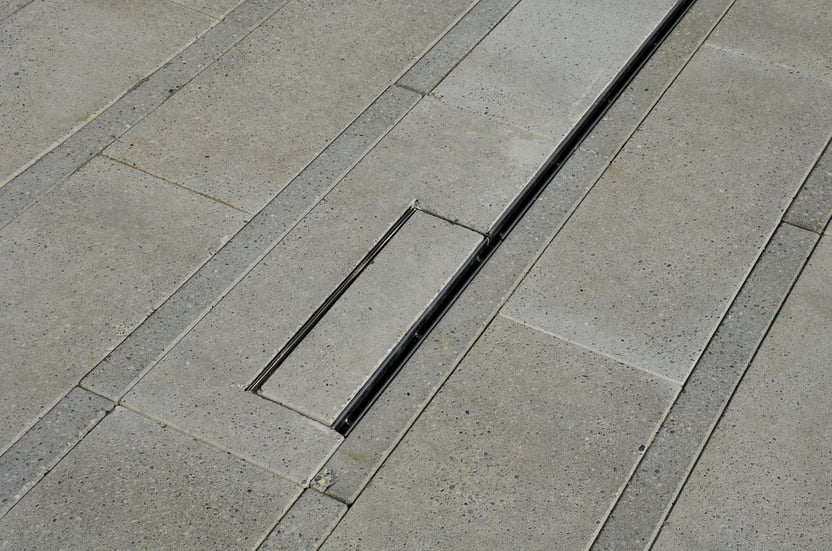
This specific type of drain differs from traditional drainage systems because of this longitudinal slot, which provides aesthetic continuity with the surrounding pavement, making the rainwater collection system virtually invisible.
Looking to expand your product line with drainage solutions?
Discover Dakota's complete range of drainage solutions - contact us today!
Looking to expand your product line with drainage solutions?
Discover Dakota's complete range of drainage solutions - contact us today!
Advantages of Slotted Linear Drains
The use of slotted linear drains is constantly growing thanks to the many benefits these systems offer:
-
Seamless Integration: The longitudinal slot provides a minimalist look and perfect integration with the surrounding pavement.
-
Adaptability: The different modular components allow for bespoke, customised configurations for any situation.
-
Easy Installation: The interlocking system simplifies and speeds up the installation process.
-
Efficient Drainage: The longitudinal slot ensures excellent collection and channelling of rainwater.
-
Easy Cleaning and Maintenance: The drains are simple to inspect and clean.
-
Strength and Durability: When made from high-resistance materials, they offer great long-term performance.
Seamless Integration of Slot Drains
One of the main advantages of slot drains is their exceptional seamless integration with the surrounding area. Unlike traditional gullies and drainage systems, the longitudinal slot provides a minimalist effect and perfect integration with the surrounding paving, making them almost invisible.
This makes them the ideal solution in all those architectural and urban settings where it’s important to combine functional efficiency with a clean look: historic city centres, pedestrian areas, residential zones, car parks, terraces, and balconies, just to name a few examples.
Adaptability of Linear Slot Drains
The modular nature of the system means you can combine different configurations of channels and grates for rainwater drainage, allowing you to adapt the slot drain to the specific needs of the project and the environment.
The range of available sizes makes it possible to fine-tune the drain's capacity based on the volumes of rainwater that need to be handled. Plus, the ability to account for slopes and the actual space available allows for their harmonious integration into any context.
Quick Installation of Slotted Linear Drains
The interlocking system of the various standardised components makes installing slotted linear drains easier and faster, cutting down on both time and labour costs.
The modular elements are simply placed next to each other and locked in place using special spacers and fastening devices.
Drainage Efficiency of a Slot Drain
The longitudinal slot guarantees excellent collection of rainwater towards the collection and disposal points. The channel shape of the system means water flows through it quickly, preventing puddles on the surrounding floors and aiding the drainage of surface water.
Furthermore, they can be installed with the right longitudinal and cross fall, ensuring they can handle even heavy downpours.
Ease of Cleaning and Maintenance
The design of slot drains makes them easy to inspect and clean. The use of special removable inspection hatches allows you to check how clean the inside of the whole system is and carry out any routine or non-routine maintenance.
Also, most large debris and foreign objects are caught by the slot grating, preventing them from entering and building up inside the drainage system.
Excellent Strength and Durability
When made from high-resistance materials like PP (polypropylene) or HDPE (high-density polyethylene), linear slot drains offer high performance in terms of mechanical strength, corrosion resistance, and long-term durability.
This makes them suitable even for demanding environments subject to heavy loads, such as industrial areas, ports, and airports. Furthermore, if properly sized, certain models can withstand vehicle traffic.
Types of Use for Slot Drains
Slotted linear drains are used in many different settings, both in residential and commercial sectors. Let's briefly look at some of the main applications.
Pedestrian Areas and Historic Centres
Their seamless integration with the pavement and the absence of visible grates and gullies make them the ideal choice for managing rainwater in pedestrian zones, historic centres, courtyards, cloisters, and anywhere you want to combine hydraulic efficiency with a clean, formal look.
Car Parks and Garages
Installed along driving aisles, slot drains quickly collect and channel rainwater, preventing puddles and standing water in car parks, garages, basement access ramps, and parking bays.
Terraces, Roof Terraces, and Balconies
Slotted linear drains are the ideal solution for efficient yet discreet linear drainage on terraces, roof terraces, balconies, and loggias of residential and other buildings.
Swimming Pools
Around the pool edge or along walkways, slot drains collect excess water from the pool, quickly channelling it towards the drainage system.
Industrial and Commercial Buildings
The high performance in terms of flow rate and mechanical strength makes linear slot drains ideal for managing large volumes of rainwater at industrial units, logistics warehouses, shopping centres, and supermarkets.
Airports
Their compliance with the most demanding load classes makes slot drains the ideal solution for rainwater drainage in airport parking and manoeuvring areas.
Ports and Docks
Slotted linear drains can be used in all those port areas subject to particularly heavy traffic, such as quaysides and mooring piers.
Design and Regulatory Requirements for Slot Drains
For optimal use of slotted linear drains, it's important to understand their technical and performance characteristics, as well as the regulatory requirements that must be met during sizing and installation.
Load Classes for Slot Drains
Drainage channels must comply with the BS EN 1433 standard, which classifies channel systems according to their maximum permissible load:
-
Class A15: Loads up to 15 kN (pedestrians and cyclists)
-
Class B125: Loads up to 125 kN (pedestrian areas)
-
Class C250: Loads up to 250 kN (light traffic)
-
Class D400: Loads up to 400 kN (standard traffic)
-
Class E600: Loads up to 600 kN (heavy loads)
-
Class F900: Loads exceeding 900 kN (very heavy loads)
It's essential to choose the most suitable load class based on the expected traffic and load conditions. For example, Class B125 is sufficient for pedestrian areas, while Class F900 is necessary for port quaysides.
Slopes and Sizing of the Linear Drainage System
To ensure proper water flow, the longitudinal slope should be between 0.5% and 1.5%. The cross fall should not exceed 5%.
The sizing of the channel must consider the maximum rainfall flow rate calculated based on local intense rainfall events and the size of the catchment area.
Fire Safety Regulations for Linear Drainage Systems
If the drains are intended for rainwater disposal from building evacuation routes, they must meet the requirements of fire safety regulations.
CE Marking for Linear Drains
Under EU Regulation 305/2011, manufacturers of linear drains must guarantee compliance with the harmonised standard BS EN 1433, indicated by the CE marking.
Materials and Finishes for Slotted Linear Drains
Slotted linear drains can be made from various materials and with different finishes to integrate perfectly with the surrounding environment.
Polymer Concrete Slot Drains
This is the most common material thanks to its high mechanical strength and resistance to weather. Finishes for slot drains made from this material can be smooth, textured, or have a stone covering.
Stainless Steel Slot Drains
This offers very high performance in terms of corrosion resistance. AISI 304 stainless steel slot drains come in various finishes: satin, matt, or polished.
Ductile Iron Slot Drains
This provides excellent load-bearing capacity, even in the most demanding environments. The surface of a linear slot drain made from ductile iron can have a metallic finish or stone coating.
Copper Slot Drains
These offer high aesthetic value as well as excellent corrosion resistance. Finishes for linear copper drains can be natural or pre-oxidised.
Natural Stone Slot Drains
These give a high aesthetic value in prestigious settings. The most commonly used materials for natural stone linear slot drains are granite, basalt, and local stones.
Corten Steel Slot Drains
Corten steel gives a characteristic rust effect with shades ranging from dark brown to orange. Linear drainage channels made from Corten steel also offer excellent durability.
Plastic Slotted Linear Drains
Plastic materials used for making slotted linear drains offer all the advantages of the previous materials, but are more economical and easier to install. They adapt better to various situations and allow for less friction to water flow thanks to their smooth, non-porous surface.
Installation of Slotted Linear Drains
Let's briefly look at the main stages for correctly installing slotted linear drains.
Excavation and Preparation of the Bed
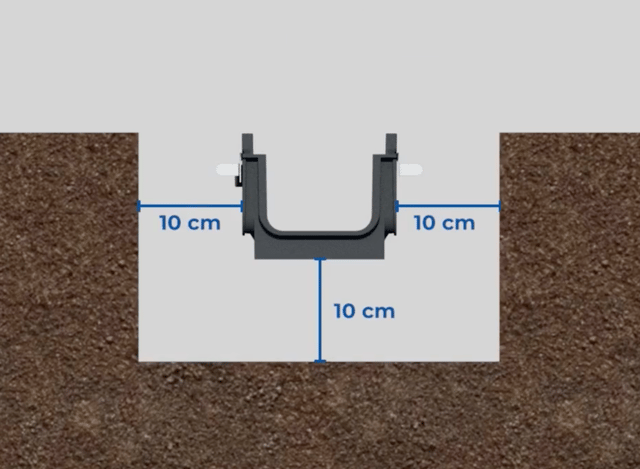
Start by digging a suitable trench to house the channels. The bottom must be compacted and carefully levelled according to the specified falls.
Laying the Drainage Channels
The channels are placed on the carefully levelled trench bottom. The different elements are joined together using the special coupling devices.
Cross Fall
If needed, spacer elements can be used to set the required cross fall.
Backfilling and Compaction
The trench is backfilled with suitable materials (sand or gravel) properly compacted around the channels.
Connection to the Disposal System
The channels are connected to the rainwater disposal system (sewer, attenuation tank, etc.).
Fitting the Grating
The slotted grating is finally placed onto the channels and locked in place using the special fastening devices.
Removing Slotted Gratings for Maintenance
For system inspection and cleaning, the slotted gratings can be quickly removed by releasing the locking devices.
Maintenance of Slotted Linear Drains
To maintain the efficiency of the drainage system over time, it's important to carry out proper periodic maintenance on the slotted linear drains.
Surface Cleaning
Removing debris, leaves, and dirt that could obstruct the slot or enter the system.
Cleaning the Drainage Channels
Using high-pressure water jets or flushing systems, remove any sediment or blockages that may have settled at the bottom of the channels, ensuring a clear path for water flow.
Checking the Slopes
Verify both the longitudinal and transverse slopes of the channels to guarantee they continue to meet specifications and allow for the proper, gravity-driven runoff of rainwater.
Inspection of Channel Joints
Examine the joining mechanisms between individual channel sections to ensure they remain watertight, intact, and fully functional.
Inspection of Channel Supports
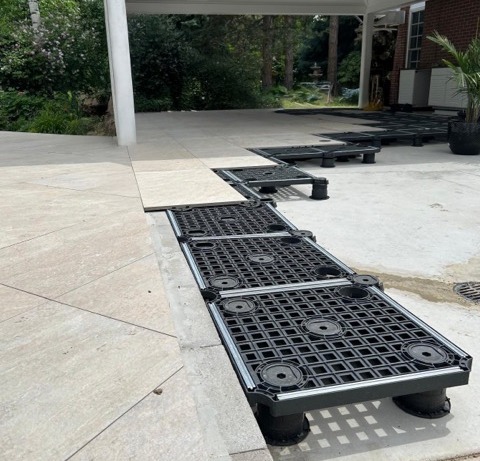
For elevated or suspended installations, inspect all support structures to confirm they are secure and providing stable, reliable support.
Replacement of Damaged Elements
Any severely damaged channel sections must be promptly removed and replaced with new, undamaged components to maintain the integrity of the entire system.
By adhering to a regular maintenance schedule, you can prevent system failures and optimize the efficiency of your drainage infrastructure for years to come.
Why Choose Slot Drains Over Traditional Systems?
As we've explored, linear slot drainage systems offer a host of compelling advantages over traditional solutions like grated drains and catch basins. Here are the key benefits:
-
Enhanced Aesthetic Discretion: Their minimalist design is nearly invisible, preserving the clean lines of your architecture.
-
Seamless Surface Integration: The narrow slot integrates perfectly with surrounding pavements, tiles, or natural stone.
-
No Visible Grates: Eliminates the industrial look of traditional drain covers, creating a smooth, uninterrupted surface.
-
Design Flexibility: Easy to install and adaptable to custom configurations for unique project requirements.
-
Continuous Drainage: Provides excellent, uninterrupted water collection along the entire length of the channel.
-
Reduced Clogging: The narrow opening is less prone to trapping large debris compared to traditional grates.
-
Easy Maintenance: The design allows for simple inspection and cleaning.
-
Trafficable Options: Select models are engineered to withstand vehicle traffic.
-
Versatile Application: Suitable for a wide range of settings, from public piazzas to private residences.
Premium Slot Drain Solutions from DAKOTA
Dakota Group offers advanced stormwater management solutions with our high-quality slotted grates, designed to create perfect linear drains.
Our Slot Grille for Drainage Channel is a standout product, available in four different heights (0, 20, 40, and 60 mm). It is designed to be compatible with our full range of Taurus® 130, Pegasus® Plus 130, and Pegasus® Short 130 channels. Crafted from durable polypropylene (PP), this grate is engineered to blend seamlessly with the surrounding paving material. It guarantees an impeccable aesthetic finish and effective drainage for residential settings like gardens, patios, pool surrounds, and green areas.
Another excellent offering is the Black Slot Grille (dimensions: 130 x 80 x 500 mm). Also made of polypropylene and featuring a galvanized steel inspection hatch, this model is perfect for residential use. It masterfully conceals inspection pits, ensuring visual continuity in the pavement. This solution is ideal for both private residences and public spaces, providing efficient rainwater management without compromising on design.
Conclusion
Linear slot drains represent an innovative and high-performance solution for rainwater drainage and collection across a multitude of architectural and urban contexts. With their superior functionality and full compliance with industry technical standards, Dakota Group's slot drains are the ideal choice for sustainable stormwater management, meeting the highest standards of technical performance, operational efficiency, and aesthetic excellence.