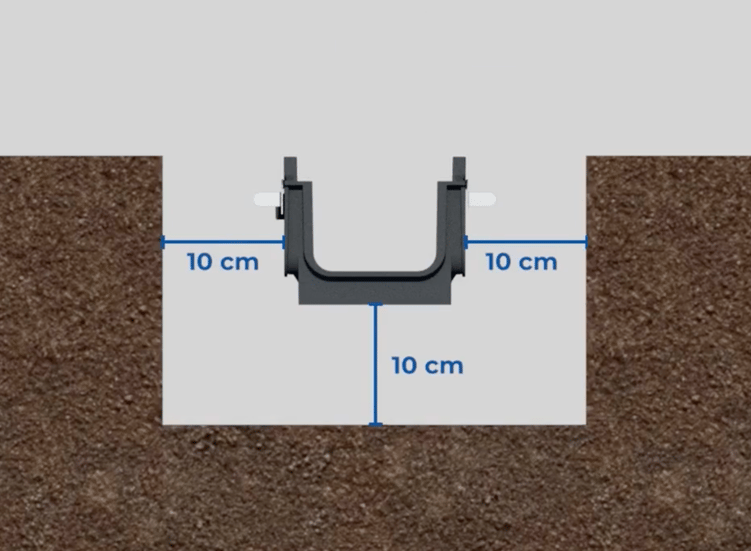
At its simplest, a drainage channel (or drain channel) is there to collect rainwater, plus any other water from things like watering gardens or using showers and indoor plumbing.
Drainage channels are a key part of any drainage systems, They help manage the natural flow of water by collecting it and directing it into the main sewers, a separate drainage system, natural water basins, or just soaking it away into the ground below.
You can think of a drainage channel as doing the same job as a traditional gully or manhole, but it works a bit differently – and often, more effectively. Let’s take a closer look.
Plastic, concrete or steel: which drainage channel is right for you?
Drainage channels come in different materials, each with its own pros and cons.
Concrete drainage channels
These are the heaviest on the market, which makes them trickier to transport and move around. Despite their weight, they’re actually quite fragile. Concrete absorbs chemicals and is easily damaged by weather over time. They’re cheap and easy to get hold of, but there’s a reason for that.
Polymer drainage channels
These are made from lightweight concrete mixed with chemicals. Compared to standard concrete, they’re thinner, lighter, and easier to handle. But they’re still brittle, and the production process is slow because of the added chemicals.
Steel drainage channels
Steel channels have a much lower flow capacity than concrete or polymer ones, and they cost more to make. If you need a higher flow rate, you have to use thicker steel, which drives the price up even further.
Plastic drainage channels (polypropylene/PP)
These are among the most popular options right now. They’re made from recycled plastic (industrial and post-consumer waste). Here’s why they stand out:
- Really lightweight and easy to handle
- Lower CO₂ emissions during transport
- Higher flow capacity thanks to better viscosity properties
- Simple to clean and maintain
- Cheaper to install because they’re light but tough
- Can be slotted together using interlocking systems
| Material | Weight | Strength | Flow Capacity | Other Characteristics |
|---|---|---|---|---|
| Cement | Very heavy – needs machinery to move | Fragile; absorbs chemicals | High | Heavy and not very resistant to chemicals and weathering |
| Polymeric | Lighter than cement; easier to handle | Fragile; slow to produce due to chemicals | Similar to cement | Lightweight concrete with chemicals – a middle-ground option |
| Steel | Requires thicker sections for high flow rates |
Limited flow unless steel is thick | Lower than cement or polymer | Heavier steel = higher cost |
| Plastic (PP) | Very light; easy to handle | Much more durable during installation; easy maintenance and cleaning | Higher flow due to better viscosity | Made from recycled plastic; allows L-shaped and T-shaped interlocking systems |
Drainage channel vs gully: what’s the difference?
They do the same basic job, so why choose a drainage channel
- Channels can hold more water because they’re longer.
- Drive-over channels installed at the roadside need just one slope. A gully in the middle of the road needs four slopes to work properly.
- Channels are less invasive – they run along the side of the road rather than digging up the centre.
- They’re not just for moving water away. If you link them to a storage basin, they can help collect and reuse rainwater too.
- Gully blockages are common. Channels have a cover grille that stops debris getting in and clogging the system.
- Channels are easier to clean – they sit at the side of the road and run lengthways rather than dropping down deep. See our guide on cleaning gutters.
How to install a drainage channel properly
Good installation starts with two key checks before you even pick up a shovel.
First things first: what you need to check
-
Rainfall data for your area – you’ll need a qualified engineer to work out how much water you need to handle (the flow rate).
-
Ground drainage – how well does the soil drain naturally? This affects how quickly water moves away.
Once you’ve got those details, you can work out the right channel size, flow capacity, and load class (foot traffic, cars, heavy vehicles, etc.), following the UNI EN 1433:2008 standard.
Step-by-step installation guide
- Dig the trench – make sure it’s wide and deep enough to leave space for concrete around the sides of the channel. Never lay the channel straight onto loose soil.
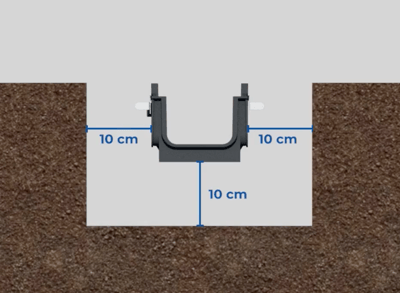
- Pour the concrete base – the depth depends on the type of channel. Make sure it’s level and compacted to form a solid, continuous bed.
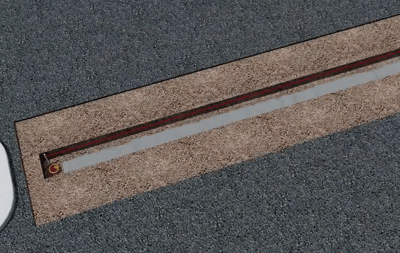
- Lay the channel from the outlet end upwards – aim for a slope of about 0.5%. Check alignment with the final drainage point as you go.
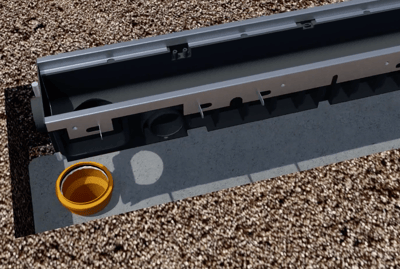
- Join the sections – use the interlocking system to connect each piece. If you need to cut the last piece to fit, make sure the joints are still secure.
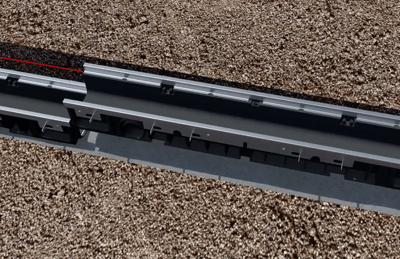
- Fit the grilles – choose the right grille for your load class (pedestrian, drive-over, etc.) and make sure it’s seated properly and locked in if required.
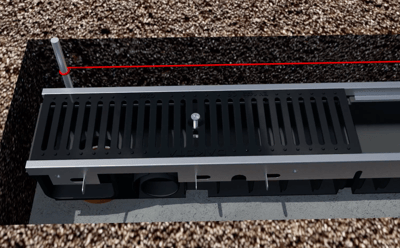
- Connect to the drainage system – link the end channel to the sewer, a soakaway, or whichever outlet you’re using, following local regulations.
- Backfill with concrete – compact it well. Make sure the grille sits about 2mm lower than the finished surface. To avoid getting grilles dirty, cover them with plastic sheeting while laying the final paving.
- Finish up – remove the protective film, fit any grille locks if needed, and wait. Leave it three days before foot traffic, five days before vehicles.
Dakota Group's rainwater drainage channels
Our drainage channels are plastic linear drainage systems designed to collect and manage rainwater in residential, industrial, and road settings.
Dakota Group has been in the construction industry for over 40 years. We make and supply gridded drainage channels in polypropylene (PP – our Pegasus range) and high-density polyethylene (PE-HD – our Taurus range). They’re ideal for industrial and road use (yards, driveways, car parks, access ramps), as well as for pool surrounds, terraces, and wet rooms.
Pegasus range
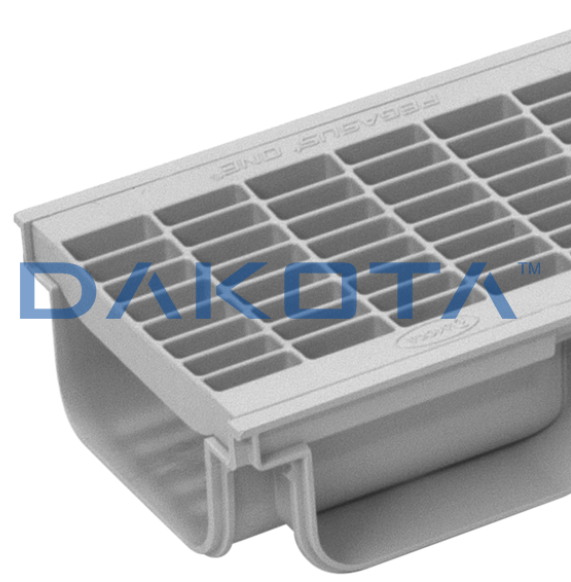
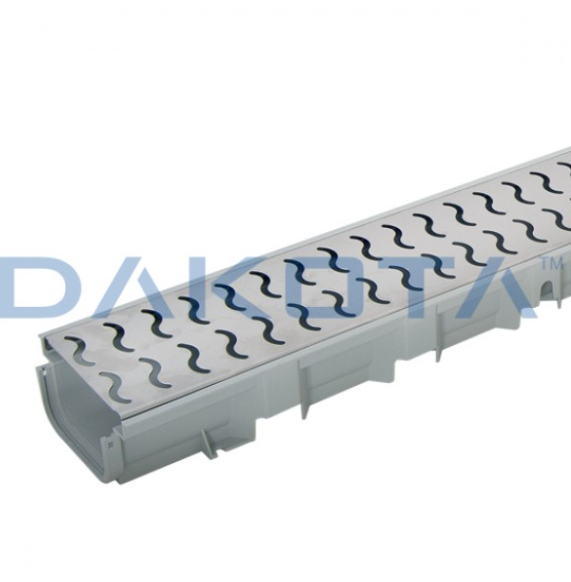
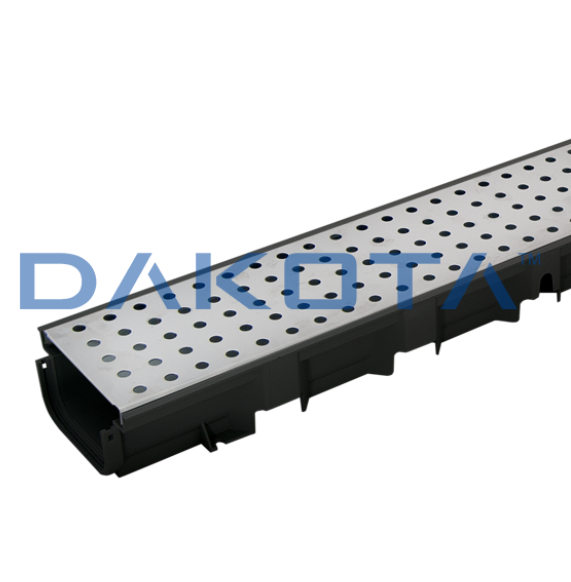
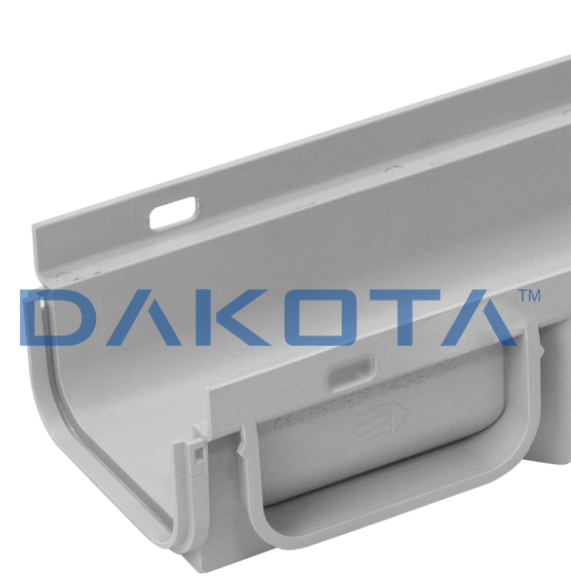
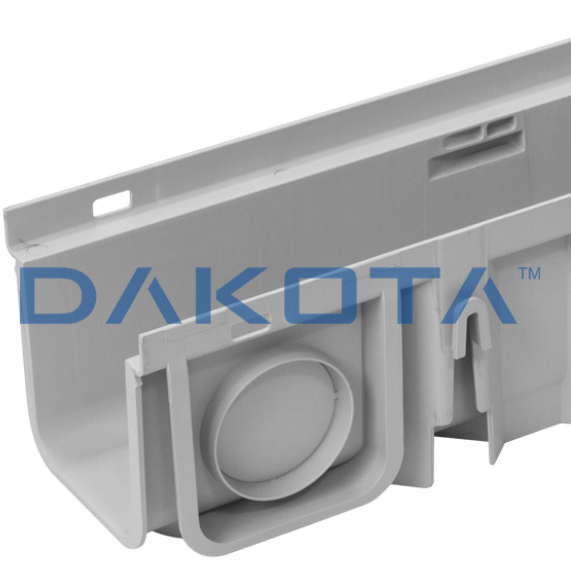
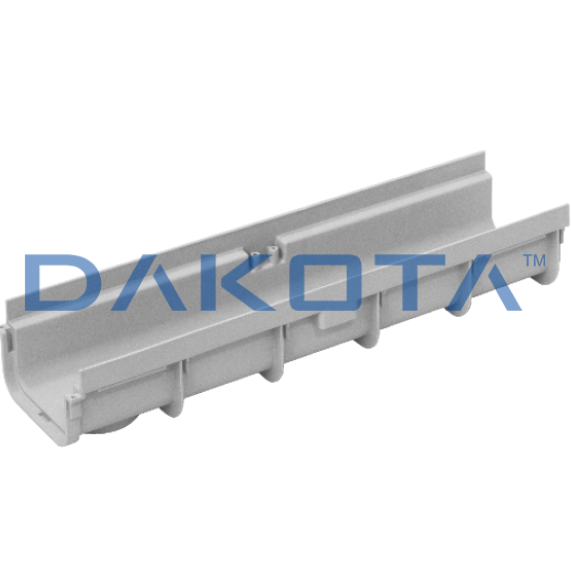
Pegasus channels are made from lightweight, strong, functional PP. They come in several colours (grey, black, sand, white) and sizes, from 130 to 370mm wide and 40 to over 300mm high, so you can match the flow capacity and surface type.
The range includes models such as:
|
|
|
|
|
|
There's also the Pegasus Short Kit: designed for ramps, entrances, and basements. It includes 24 grey PP drainage channels (130 x 75 x 500mm), five end caps, and 24 PP grilles at 500mm each.
Taurus range
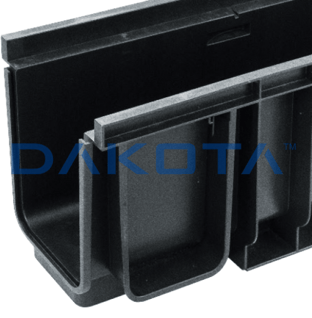
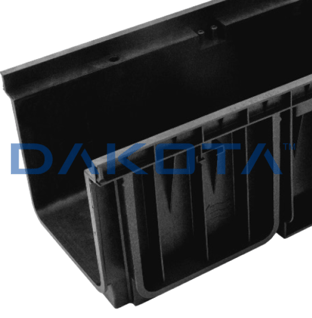
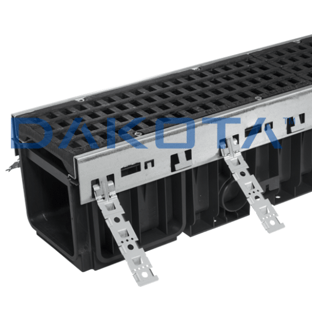
Taurus channels are professional-grade, made from PE-HD. They’re tough, impact-resistant, and suitable for collecting rainwater or industrial liquid run-off.
Paired with a wide selection of heavy-duty grilles, they’re used in pedestrian areas, driveways, roads, motorways, ports, and airports. The Taurus 370 model is built for large infrastructure projects like motorways, airports, and big car parks.
|
|
|

|
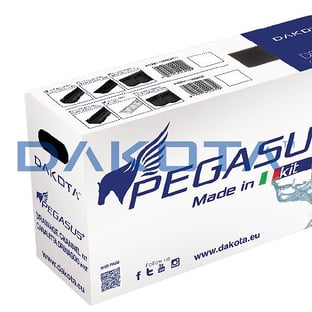
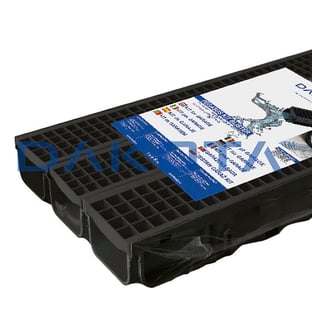
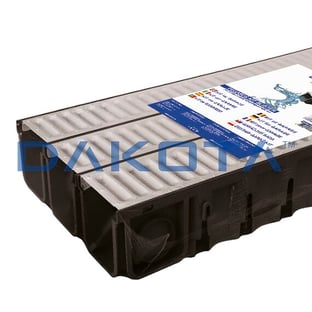
Pegasus Garage Kit Line
A pre-formed drainage kit designed for garages, ramps, and technical spaces.
|
|
|
Conslusions
With a wide choice of accessories and load classes up to F900, Dakota drainage channels offer a high-quality, complete solution for rainwater management. If you’re a builder’s merchant or hardware retailer looking to add a top-performing plastic drainage range to your stock, they’re well worth a look.
Index Content

Lorem ipsum dolor sit amet
Lorem ipsum dolor sit amet, consectetur adipiscing elit. Nunc iaculis mollis aliquet. Ut sodales sodales pretium.
Lorem Ipsum